Among connoisseurs of Indian handlooms, the state of Odisha represents an unparalleled sanctuary of textile artistry. Yet when choosing a pure handloom silk saree for a wedding, puja, or festive celebration, buyers frequently find themselves captivated by a classic dilemma: Berhampuri Silk vs Sambalpuri Silk.
While both heritage drapes hold prestigious Geographical Indication (GI) status and represent centuries of master craftsmanship, they originate from entirely different cultural geographies, rely on distinct loom architectures, and offer completely contrasting aesthetic personalities. In this definitive guide, we compare both legends across weaving mechanics, drape, durability, pricing, and styling to help you choose the ideal masterpiece for your wardrobe.
Berhampuri Silk (Southern Odisha)
Technique: Solid body with needle-interlocked Phoda Kumbha (temple) borders.
Feel: Crisp, heavyweight, structured drape.
Best For: Sacred wedding ceremonies, Odia bridal rituals, temple pujas.
Sambalpuri Silk (Western Odisha)
Technique: Complex Bandha (Ikat tie-and-dye) across warp and weft.
Feel: Soft, fluid, lightweight drape.
Best For: Receptions, festive soirées, cultural events, formal galas.

1. Comprehensive Comparison Matrix
| Attribute | Berhampuri Patta (Silk City) | Sambalpuri Silk (Bandha Ikat) |
|---|---|---|
| Geographical Origin | Berhampur (Ganjam district, South Odisha) | Bargarh, Sonepur, Sambalpur (West Odisha) |
| Primary Weaving Technique | Needle-interlocked Phoda Kumbha temple borders | Double / Single Bandha (Resist tie-and-dye) |
| Body Aesthetics | Rich, solid jewel tones (Maroon, Royal Blue, Mustard) | All-over geometric motifs, chessboard (Pasapalli), floral |
| Border Architecture | Dramatic triangular temple spires (Kumbha) seamlessly locked | Ikat patterned borders with rudraksha, floral, or bird motifs |
| Fabric Density & Drape | Heavyweight (3-ply/4-ply mulberry), crisp structural pleats | Medium-weight, supple, fluid drape with soft finish |
| GI Status | Registered GI in 2009 | Registered GI in 2010 |
| Price Range (Pure Silk) | ₹14,500 – ₹32,000+ | ₹12,000 – ₹28,000+ |
| Bridal & Ritual Role | Essential bridal drape; paired with groom's matching Joda | Festive celebrations, cultural ceremonies, wedding receptions |
2. Loom Architecture: Phoda Kumbha vs Bandha Ikat
To understand why these sarees look and feel so fundamentally different, one must step into the weaver’s pit.
In a Sambalpuri Silk Saree, the artistry takes place largely before the yarn touches the loom. Silk threads are stretched across wooden frames, meticulously mapped according to intricate mathematical graphs, tied with rubber strips, and dipped repeatedly in dye baths. When woven, these calculated color segments align into the iconic blurred, feathered Ikat motifs symbolizing the universe, conches, and lotus blossoms.
In a Berhampuri Patta Saree, the yarn is dyed in solid batches. The magic happens dynamically on the loom through the Phoda Kumbha technique. Two artisans maneuver three separate shuttles simultaneously across the width of the fabric. Where the border yarn meets the body yarn, miniature needles interlock the threads to craft sharp, razor-crisp temple spires. There are no loose floats, no printed cuts—only pure structural integration.
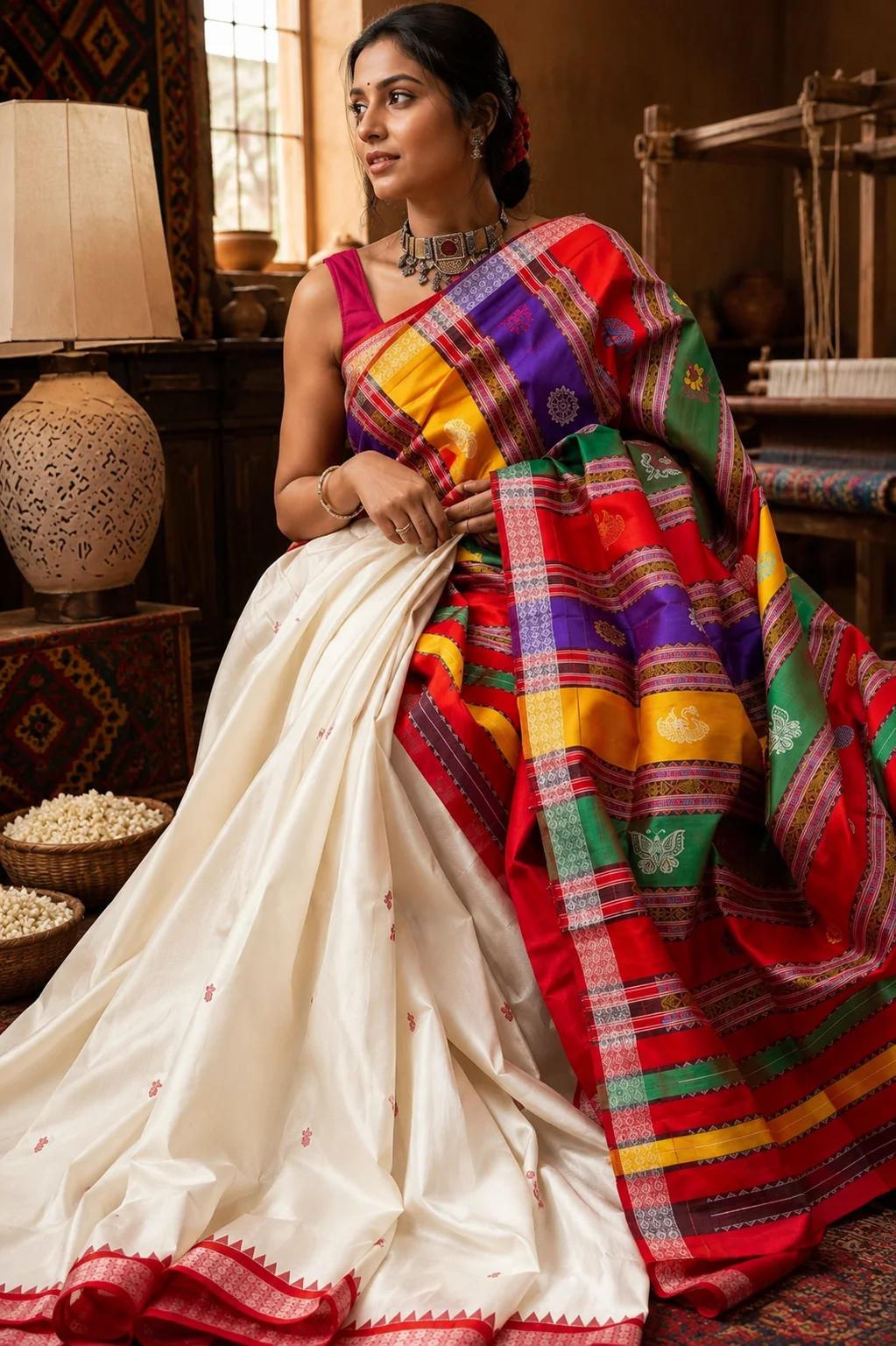
3. Which Saree Should You Choose For Your Next Occasion?
Choose Berhampuri Silk When:
- You want a classic, majestic drape that holds its pleats immaculately for long wedding ceremonies without crumpling.
- You prefer striking solid jewel-tone silks offset by dramatic temple architecture rather than busy all-over prints.
- You are preparing a traditional Odia bridal trousseau or celebrating auspicious rituals like housewarmings and anniversaries.
Choose Sambalpuri Silk When:
- You appreciate intricate, storytelling Ikat motifs like the sacred Pasapalli chessboard, wildlife, or floral vines.
- You want a fluid, lighter drape that moves effortlessly for evening parties, high-profile dinners, and cultural festivals.
- You love rich, multi-hued contrast combinations featuring traditional Odia folklore themes.
Frequently Asked Questions
Can I wear a Berhampuri silk saree to an evening party?
Absolutely. Rich jewel tones like midnight blue, regal magenta, and emerald green paired with gold jewelry create an aristocratic, timeless look that stands out in any high-end evening reception.
Are Sambalpuri and Berhampuri sarees both 100% pure silk?
Yes, authentic versions of both are handwoven from 100% natural mulberry silk yarns and certified with Silk Mark India labels.
Discover Both Odisha Legends at Utkal Aditri
Whether you seek the structural majesty of Berhampur Patta or the poetic geometry of Sambalpuri Ikat, every saree in our archive is directly handwoven by master artisan cooperatives.