In the coastal district of Ganjam, tucked away in the southern heart of Odisha, lies Berhampur—known across the subcontinent as the "Silk City." For more than two centuries, the master weavers of Berhampur have produced a silk textile so distinctive, regal, and structurally dense that it was granted the prestigious Geographical Indication (GI) tag in 2009: the celebrated Berhampuri Patta.
Unlike the tie-and-dye Ikat weaves of Western Odisha, the Berhampuri Patta saree is distinguished by its heavyweight, high-luster pure mulberry silk and its signature Phoda Kumbha (needle temple spire) borders. Handwoven with meticulous precision on traditional pit looms, this saree is the traditional choice for Odia brides, sacred temple rituals, and grand milestone celebrations.
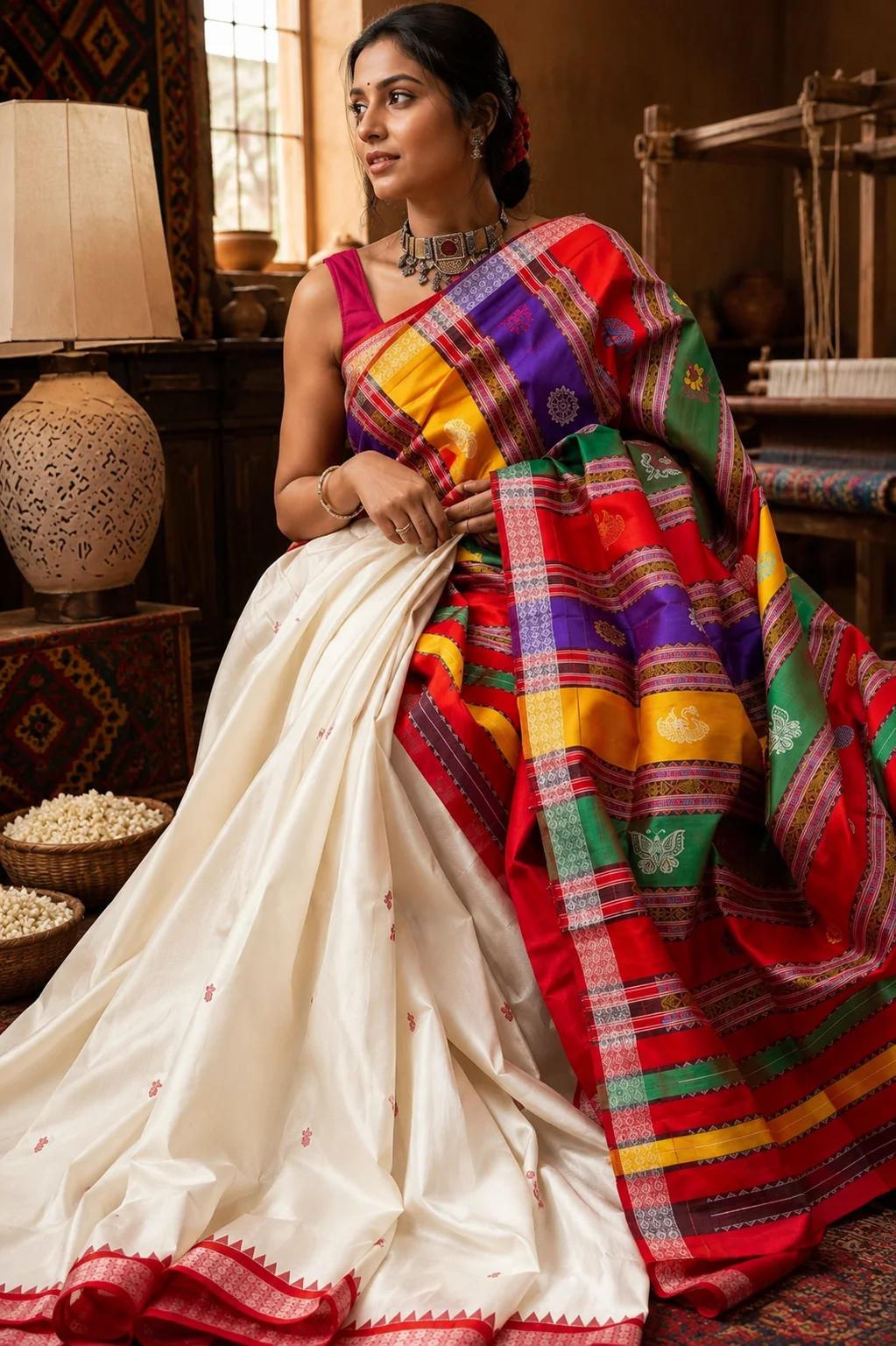
1. The Anatomy of Phoda Kumbha (Temple Spire Borders)
The defining hallmark of a genuine Berhampur silk saree is the Phoda Kumbha border. In Odia, Kumbha translates to temple spire or pitcher, representing spiritual elevation and sanctity. Phoda refers to the ancient interlocking needle-weaving technique where the border warp and weft meet the body fabric.
In cheap machine imitations, temple patterns are printed or simply jacquard-woven as flat stripes. In an authentic handwoven Berhampuri Patta:
- Two weavers often sit at the pit loom simultaneously, carefully interlocking the body silk with the contrast border yarns using miniature wooden shuttles.
- Each triangular spire has slight, graceful organic variations—a certified sign of human hands, not a digital punch card.
- The reverse side displays seamless interlocking threads without loose floating synthetic strings.
Weaver Pro-Tip:
Turn the temple border over. In an authentic Berhampuri Patta, the interlocking point between the border color and the body color is structurally integrated into the fabric, making the joint virtually impossible to fray or split even after decades of wear.
2. Pure Mulberry Silk: The Heavyweight Heirloom Touch
While modern fast-fashion sarees use flimsy 20-30 gram silk yarns blended with polyester, a certified Berhampur Patta is woven using 100% heavyweight 3-ply and 4-ply mulberry silk yarns.
This gives the saree its legendary "Khadada" structure—a crisp, royal drape that holds its pleats immaculately throughout an 8-hour wedding or puja ceremony without slipping or sagging. When you run your fingers across the fabric, it radiates a natural, deep, subdued luster rather than the glaring plastic shine of synthetic satin blends.
3. The Berhampuri "Jodi" Tradition
Historically, the weavers of Berhampur did not weave sarees in isolation. They wove a sacred set called the Berhampuri Jodi: a matching pair consisting of a saree for the bride and a Joda (silk dhoti and chadar) for the groom. To this day, in aristocratic Odia families, no wedding ritual is complete without the presentation of an authentic Berhampuri Patta Jodi.
Price Guide: What Should a Real Berhampuri Patta Cost?
Because of the sheer density of raw mulberry silk and the weeks of labor required for needle-interlocked Phoda Kumbha borders:
100% pure silk, Silk Mark certified, traditional pit loom weave with unstitched blouse piece.
Synthetic art-silk with jacquard-printed borders; frays easily and loses luster after two washes.
Explore Certified Berhampur Silk Sarees
Every Berhampuri Patta in the Utkal Aditri collection is sourced directly from master weaver cooperatives in Ganjam, with 100% pure silk mark certification and insured worldwide shipping.
View Berhampur Silk Collection